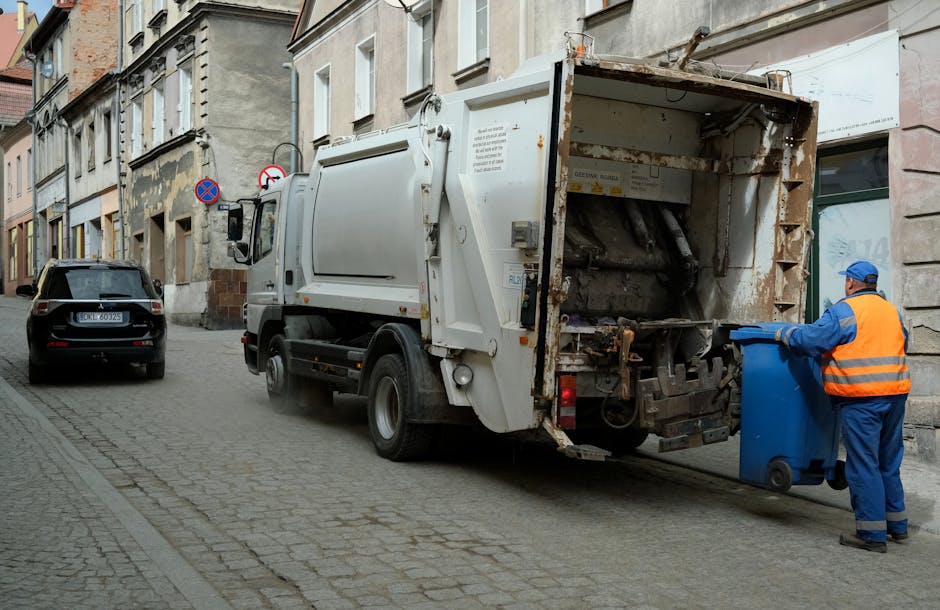
Avoid hidden fees in Fitzrovia rubbish removal quotes
If you have ever looked at a rubbish removal quote and thought, "That seems fine... but what am I missing?", you are in the right place. Hidden fees can turn a tidy, reasonable-looking price into an irritating bill by the end of the job. In Fitzrovia, where access can be tight, parking can be awkward, and waste jobs are often time-sensitive, understanding avoid hidden fees in Fitzrovia rubbish removal quotes is not just sensible. It saves money, sure, but it also saves that sinking feeling when a driver arrives and suddenly the numbers change.
This guide walks through what hidden fees look like, why they happen, how to spot them early, and what to ask before you book. You will also find a practical checklist, a comparison table, and a few real-world examples so you can compare quotes with more confidence. Truth be told, the best quote is not always the cheapest one. It is the one that is clear.
Why avoiding hidden fees matters
Hidden fees are a problem because they make price comparison almost meaningless. A quote might look lower than the rest, but once access charges, stair carry fees, congestion-related extras, or minimum-load rules are added, the final total can jump fast. That is especially frustrating when you are juggling a flat clearance, a furniture disposal job, or a bigger house clearance and you need certainty, not surprises.
In a place like Fitzrovia, small practical details matter. A van may not be able to park right outside. A basement or top-floor flat can add labour time. Waste may need to be carried through narrow hallways, shared entrances, or a lift that is, let's say, being temperamental. None of that is unusual. But if it is not discussed properly before the job, it can be used later as a reason to inflate the bill.
That is why clear rubbish removal pricing is more than a nice-to-have. It is a trust issue. It also affects planning. If you know the full cost up front, you can decide whether to clear everything at once, split the work into phases, or bundle waste removal with another service such as home clearance or office clearance.
Key takeaway: A cheap quote is only useful if it is complete. The real goal is not the lowest headline number; it is the lowest final bill for the exact job you need.
How rubbish removal quotes work
Most rubbish removal companies base their quotes on a mix of load size, waste type, labour, access, and disposal costs. Some use van-load pricing. Others quote by volume, weight, or a fixed item list. The tricky bit is that the method itself is not the problem. The problem starts when the quote does not explain what is included.
A proper quote should tell you, in plain English, what the team is charging for. At minimum, you want to know whether collection, labour, disposal, recycling, VAT if applicable, and any access-related requirements are included. If a business is handling different types of clearances, such as furniture clearance, garage clearance, or builders waste clearance, the cost structure may vary depending on what is being removed and how difficult it is to load.
Here is how hidden fees often sneak in:
- Vague descriptions: "From GBPX" without explaining what changes the price.
- Missing access details: stairs, lifts, restricted parking, or long carry distances added later.
- Waste category surprises: mixed waste, heavy items, or awkward materials charged as extras.
- Minimum load rules: a small job billed as if it were bigger.
- Disposal add-ons: fees for landfill, recycling, or skip-equivalent handling appearing after booking.
If you are comparing waste removal services, try to compare like with like. A quote that includes labour, disposal, and access handling can easily be better value than a lower number that leaves out half the job.
Key benefits and practical advantages
Being strict about quote transparency has a few very real benefits. The obvious one is cost control. But there are others, and some are easy to overlook until you are standing in the doorway with a pile of old furniture and a ticking clock.
- Better budgeting: you can plan around the actual spend, not a guess.
- Fewer disputes: clear terms reduce awkward conversations at the kerb.
- Faster decisions: it is easier to choose between providers when pricing is comparable.
- Less stress on the day: you already know whether the staircase, parking, or heavy lifting has been accounted for.
- More suitable service selection: you can match the job to the right service, whether that is flat clearance, loft clearance, or garden clearance.
There is also a trust benefit. Companies that are comfortable explaining pricing usually have a more organised process overall. They tend to ask better questions, turn up prepared, and leave fewer loose ends. Not always, of course. But enough that it is worth paying attention.
For homes, landlords, and local businesses in Fitzrovia, that reliability matters because time and access are often tight. One missed detail can ripple through the whole day.
Who this is for and when it makes sense
This approach makes sense for almost anyone booking a clearance job, but it is especially useful if your waste collection has a few moving parts. That might include stairs, shared entrances, bulky furniture, mixed waste, or time restrictions. If any of that sounds familiar, you will benefit from being a little more forensic before you agree to a price.
It is particularly relevant for:
- Tenants moving out and needing to avoid last-minute deductions or rushed decisions.
- Landlords and letting agents who need a clean handover and fixed spending.
- Homeowners clearing out accumulated clutter, old appliances, or renovation leftovers.
- Office managers arranging a tidy, low-disruption clearance.
- Tradespeople who want dependable builders waste clearance without back-and-forth on pricing.
- Anyone comparing removal options and trying to decide whether a one-off collection or a broader service makes more sense.
It also makes sense when you are not in a rush. A quote checked carefully today is cheaper than a rushed agreement tomorrow. That sounds obvious, but in the real world people book while half-distracted, often with a room full of mess and a phone on speaker. Happens all the time.
Step-by-step guidance
If you want to avoid hidden fees in Fitzrovia rubbish removal quotes, use a simple process. You do not need a spreadsheet. Just a few disciplined questions and a habit of getting things in writing.
1. Describe the job accurately
Be honest about what needs removing. Mention bulky items, mixed loads, broken furniture, white goods, bags, and anything unusually heavy. If the job includes a shed, loft, basement, or office, say so. The more complete the picture, the less room there is for "unexpected" charges.
2. Explain access clearly
Access is one of the biggest pricing triggers. Is there a lift? If so, does it work? How many flights of stairs are involved? Can a van park outside, or will the team need to walk the load from a side street? Small details can make a meaningful difference.
3. Ask what is included in the quoted price
Do not settle for a headline figure alone. Ask whether the quote includes labour, loading, disposal, recycling, congestion-related handling, and VAT if relevant. If the provider charges by volume or weight, ask where the threshold changes.
4. Ask about possible extras before booking
This is where hidden fees usually live. Ask directly about access fees, minimum charges, weekend rates, urgent booking fees, dismantling, or extra labour for heavy items. A transparent provider will not mind. If they get a bit slippery, that tells you plenty.
5. Request confirmation in writing
Even a short email is better than a verbal estimate you will not remember properly later. Written confirmation helps both sides. It reduces misunderstandings and gives you something to refer back to if the job changes.
6. Check the terms before you agree
Yes, nobody loves reading terms and conditions. Still, this is where policies about cancellations, delays, access problems, or additional charges often sit. If you want to review the company's general legal and payment information, look at terms and conditions and payment and security.
7. Compare the full total, not just the headline rate
Once you have two or three properly detailed quotes, compare the final expected cost and the level of service. One company may include recycling and labour while another charges separately for both. That changes the picture completely.
Expert tips for better results
After years of looking at clearance jobs, one thing stands out: the best customers are not the ones who know every industry term. They are the ones who ask clear questions and stay a little suspicious of anything vague. Sensible suspicion. Not paranoia. There is a difference.
- Use photos when possible: a few good images often prevent pricing errors.
- Group items by type: separating furniture, garden waste, and builder's waste makes quoting easier.
- Check whether dismantling is extra: wardrobes, beds, and desks can take longer than people expect.
- Ask whether recycling is included: some companies build it in, others price it separately.
- Confirm timing windows: same-day or narrow delivery slots may carry a cost.
- Keep the job accessible: if possible, clear pathways before the crew arrives. It sounds small, but it helps.
A small practical note: if your clearance is tied to a move, a refurb, or an end-of-tenancy deadline, book with a cushion of time. Rushed jobs are where extra charges are most likely to be accepted without much thought. You are tired, the room is half-packed, someone is asking where the kettle went. That is not when you want to be haggling.
If sustainability matters to you, ask how the provider handles reusable items and segregates waste. You can also review a company's recycling and sustainability approach to understand whether that is part of their normal process.
Common mistakes to avoid
Most quote problems come from the same handful of mistakes. Avoid these and you are already ahead of the game.
- Choosing the lowest price without checking the detail. Cheap can be fine, but not if the add-ons make it expensive later.
- Not mentioning stairs, lifts, or parking limits. The crew can only price what they know.
- Assuming all waste is treated the same. Mixed loads, heavy rubble, and electrical items may be handled differently.
- Ignoring the small print. Cancellations, waiting time, and access failure policies matter.
- Booking without evidence. If a price is agreed, keep a copy.
- Overfilling the load on the day. It is a classic way to trigger a higher bill. Also, not very fun.
One more mistake deserves its own mention: forgetting to ask about disposal destination and duty of care. It is not about becoming a compliance expert overnight. It is about choosing a provider that behaves professionally, not just cheaply.
Tools, resources and recommendations
You do not need specialist software to keep rubbish removal pricing under control. A phone, a few notes, and maybe a photo folder will do most of the work. Still, a simple system can help.
- Photo set: take wide shots of the rooms or outdoor area, then closer shots of bulky items.
- Simple item list: write down anything large, awkward, or heavy.
- Access notes: floor number, lift status, parking restrictions, and doorway width if relevant.
- Comparison sheet: list each quote, what is included, and any likely extras.
- Message trail: keep emails or text confirmations together so you can refer back quickly.
For pricing clarity, it can also help to review a company's published pricing guidance before you request a quote. A page like pricing and quotes is useful if you want to understand how a provider frames its charges and what they may need from you to price accurately.
If the job is sensitive, unusually large, or tied to property handover, you may also want to check the provider's company information. An about us page can give a feel for how they work, while a direct contact us option is useful when you need a clarification before you commit.
Law, compliance, standards and best practice
Rubbish removal is not just about moving things from one place to another. In the UK, waste should be handled responsibly, with attention to safe loading, lawful disposal, and correct segregation where needed. You do not need to know every rule to make a sensible booking, but you should expect the company to act professionally and to explain what happens to your waste.
Good practice usually includes:
- Clear pricing: no surprise fees added after the job starts.
- Responsible disposal: waste should go to legitimate facilities or approved recovery routes.
- Safe working methods: careful lifting, sensible team sizes, and attention to access risks.
- Transparent terms: especially around cancellation, waiting time, and failed access.
If you are booking clearance for a business premises, you may also need a more formal approach to records, access, and scheduling. In those cases, business waste removal can be the better fit because the service expectations are usually more structured.
It is also worth looking at a provider's safety and insurance information. Pages such as insurance and safety and health and safety policy can tell you whether the company takes everyday risk seriously. That matters more than people think. A tidy quote is nice; a safe job is better.
Options, methods and comparison table
Different quote styles suit different jobs. Here is a practical comparison to help you decide what feels clearest.
| Quote method | How it works | Pros | Watch-outs |
|---|---|---|---|
| Fixed-price quote | A set price for a defined job | Easy to budget, less stress on the day | Needs accurate information up front |
| Volume-based quote | Price depends on how much space the waste takes | Useful for mixed loads and general rubbish removal | Misjudging volume can cause disputes |
| Load-and-labour quote | Based on what is collected plus how hard it is to remove | Flexible for awkward access or heavy items | Can be harder to compare between firms |
| Itemised quote | Each element is priced separately | Very transparent if done properly | Can become complex if the item list changes |
For many households, a fixed-price or itemised quote is easiest to trust. For complex jobs, volume-based pricing can work well if the provider asks detailed questions and explains the boundaries. There is no single perfect option. The right one is the one you understand before anyone turns up with a van.
Case study or real-world example
Imagine a small Fitzrovia flat clearance. The customer needs an old sofa, a broken wardrobe, four bags of mixed rubbish, and a couple of office chairs removed before a midweek move. On the first quote, the headline price looks low. Nice and cheerful. But it does not mention stair carry, disposal, or a minimum-load charge. On the second quote, the price is slightly higher, but it includes labour, loading, and disposal. The third quote sits between the two and asks for photos before confirming the final cost.
The customer chooses the second provider because the price is complete, not just attractive. On the day, the team arrives, removes the items in one visit, and there is no awkward "oh, that'll be extra" conversation at the door. The job is done. The street is quiet again. One less thing to think about.
This is a good example of how the cheapest-looking option can be the most expensive in practice. It is also why comparing like for like matters so much when you are booking flat clearance or any other local waste job.
Practical checklist
Use this quick checklist before you accept a quote.
- Have I described every item honestly?
- Did I mention stairs, lifts, parking, and carry distance?
- Do I know exactly what is included in the price?
- Have I asked about VAT, disposal, and labour?
- Are there any likely extras for awkward access or heavy items?
- Is the quote confirmed in writing?
- Do the terms explain cancellations or delays?
- Have I compared the full final cost, not just the headline number?
- Does the provider look clear about safety and responsible disposal?
- Do I feel comfortable with the explanation, or still uneasy?
If you tick most of those boxes, you are in good shape. If a provider cannot answer them clearly, that is a useful answer in itself.
For household jobs that involve mixed clutter, a broader service like house clearance or furniture disposal may be more suitable than a basic ad-hoc collection. Matching the job to the right service often prevents pricing friction later.
Conclusion
To avoid hidden fees in Fitzrovia rubbish removal quotes, focus on clarity, not guesswork. Be specific about the waste, honest about access, and firm about getting the full cost in writing. Compare quotes on what they include, not what they hint at. That one habit alone can save you money, time, and a fair bit of annoyance.
In Fitzrovia especially, where access can be tricky and no two clearances are quite the same, a careful quote process is worth the effort. You do not need to interrogate everyone like a detective. Just ask the right questions, stay alert to vague language, and trust the providers who answer plainly.
Get a free quote today and see how much you can save.
And if you are still weighing things up, that is fine too. A calm, clear decision usually feels better the next morning.
Frequently Asked Questions
What counts as a hidden fee in rubbish removal?
A hidden fee is any cost that was not made clear before you agreed to the job. Common examples include access charges, stair carry fees, disposal add-ons, minimum-load costs, and extra labour charges.
Why do rubbish removal quotes change after the job starts?
Usually because the provider discovers something that was not included in the original description, such as difficult access, heavier waste, more items than expected, or a need for extra labour. That is why accurate information matters.
Should a quote include disposal costs?
It should be clear whether disposal is included. If it is not, ask how it will be charged. A transparent quote should make that obvious before you book.
How can I compare two rubbish removal quotes fairly?
Compare the full expected total, not just the headline price. Check what each quote includes for labour, loading, disposal, recycling, and any access-related conditions.
Is a fixed-price quote always better?
Not always, but it is often easier to understand. A fixed price can work very well if the job is described properly and the provider confirms exactly what is covered.
Do I need to mention stairs and parking?
Yes. In Fitzrovia, access details can make a real difference to the price. Mention stairs, lifts, parking restrictions, and how far the waste must be carried.
Can I avoid extra charges by sending photos?
Yes, photos are one of the simplest ways to reduce pricing errors. Wide shots plus close-ups of bulky items help the provider judge the job more accurately.
What should I check in the terms and conditions?
Look for cancellation rules, failed access policies, waiting time charges, and whether the quote can change if the job differs from the description you gave.
Are recycling charges normally separate?
Sometimes they are included, sometimes not. Ask directly. A good provider will explain whether recycling, recovery, or disposal is part of the quoted price.
How do I know if a company is trustworthy?
Look for clear explanations, written confirmations, sensible questions about the job, and visible safety information. A company that is open about pricing usually tends to be more reliable overall.
Is it worth paying more for a clearer quote?
Often, yes. A slightly higher quote that includes everything can be better value than a cheaper one that grows once the team arrives. Nobody likes surprise maths.
What if my job changes after I get the quote?
Tell the provider as soon as possible. A good company will rework the price based on the new details rather than springing the change on you at the last minute.
Where can I learn more about pricing and service standards?
You can review the provider's pricing information, safety details, and sustainability approach to get a clearer sense of how they work before you book.